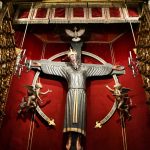
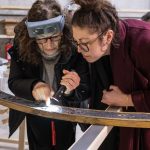
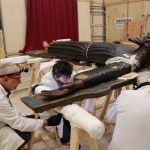
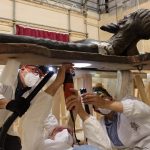
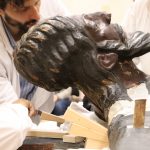
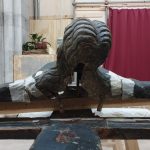
Volto Santo, 8th–9th century, Cathedral of San Martino, Lucca

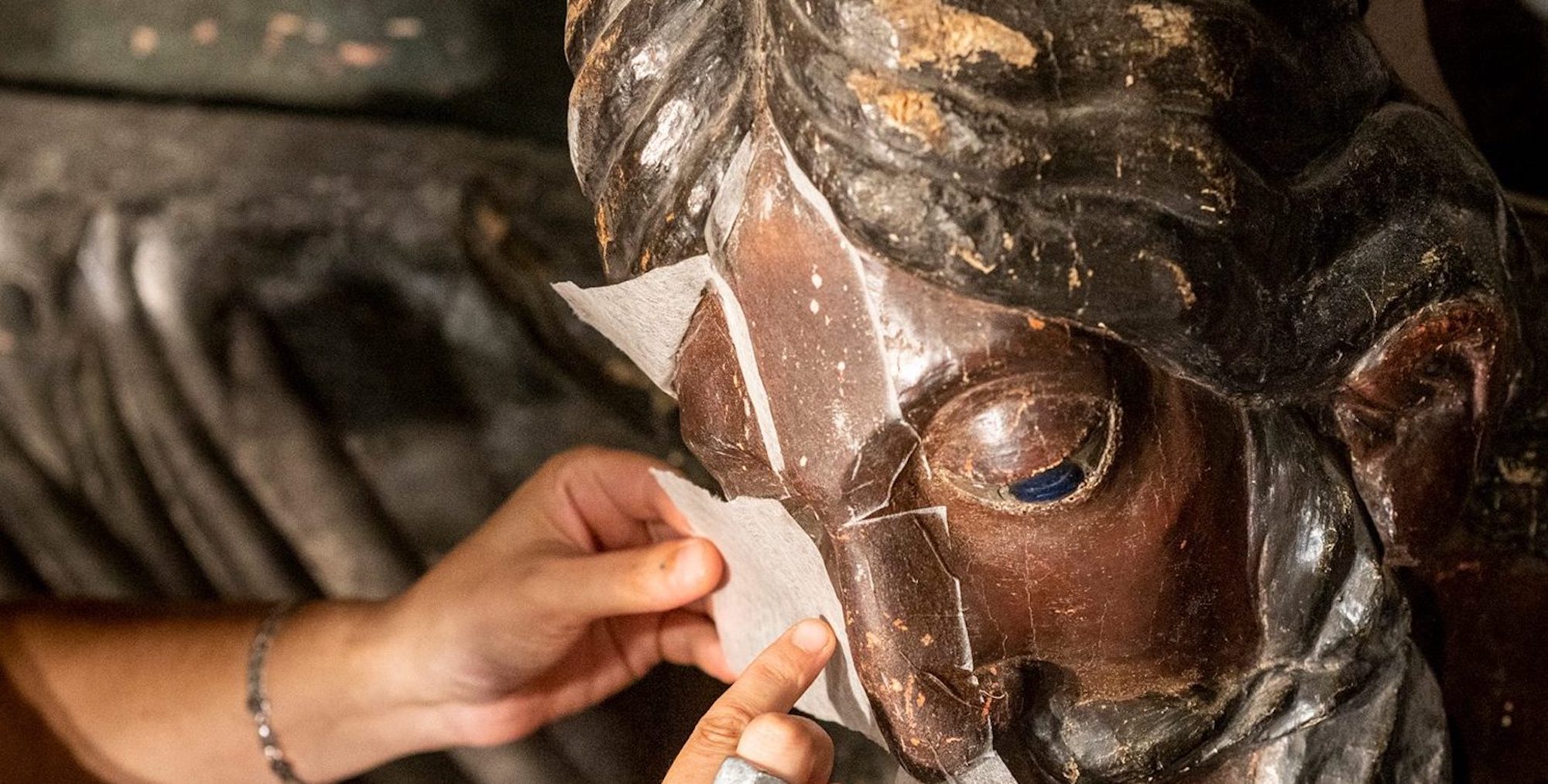
  • : Restoration Intervention
  • Status: in corso

Data

Activity information

Information on the work

Historical and descriptive information

The Volto Santo is a monumental polychrome wooden sculpture depicting a tunicated Crucifix, described in legend as an acheiropoieton. It has been, and remains, the object of extraordinary veneration across Europe since the Middle Ages, and has come to embody the religious identity of the city of Lucca. It is housed in the Renaissance tabernacle made by Matteo Civitali in the left nave of the Cathedral of San Martino. Scholarly consensus had previously placed the work between the 12th and 13th centuries; however, a recent campaign of radiocarbon (¹⁴C) dating has pushed the date back to the 8th–9th century.

Technique

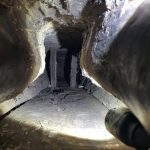
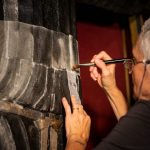
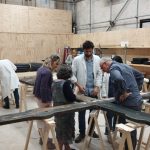
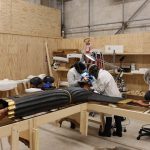
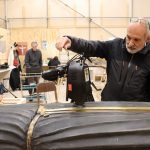
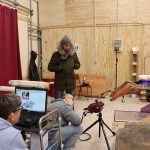
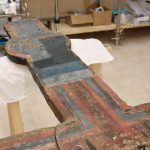
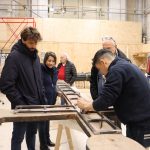
The Volto Santo consists of three elements in walnut: the body, carved from a single trunk hollowed out entirely at the back, and the two arms, which connect to it via tenons inserted into corresponding housings. Six tapered wooden pins secure the Crucifix firmly to the Cross, in which the two elements forming the upright and the crossbeam are joined with a half-lap joint, reinforced by a wooden pin and four large metal nails clinched on the front. The total weight of the sculpture is approximately 157 kg. The polychromy currently visible, on both the Crucifix and the Cross, is the result of successive overpainting and layers of different film-forming materials. As is common with ancient wooden sculptures, the work is characterised by the coexistence of several materials alongside the wood and the preparatory and paint layers: the incamottatura canvas lining, applied at the junction of the arms with the body and beneath the gilding; the glass paste eyes; certain textile elements decorating the ends of the belt; and the metalwork of the Nimbus, itself composed of wooden parts, coloured glass pastes, and silver and gilded copper alloy sheets. The technique of the Volto Santo has been studied through careful direct observation — made possible after the transfer of the work to the site workshop set up in the left transept of the Lucca cathedral — supported by the results of diagnostic investigations: in particular, X-ray images proved fundamental to understanding the structural features, while stratigraphic sections and multispectral analyses were used to characterise the polychromy and the non-original film-forming and deposit layers.

Next section