Description of the intervention
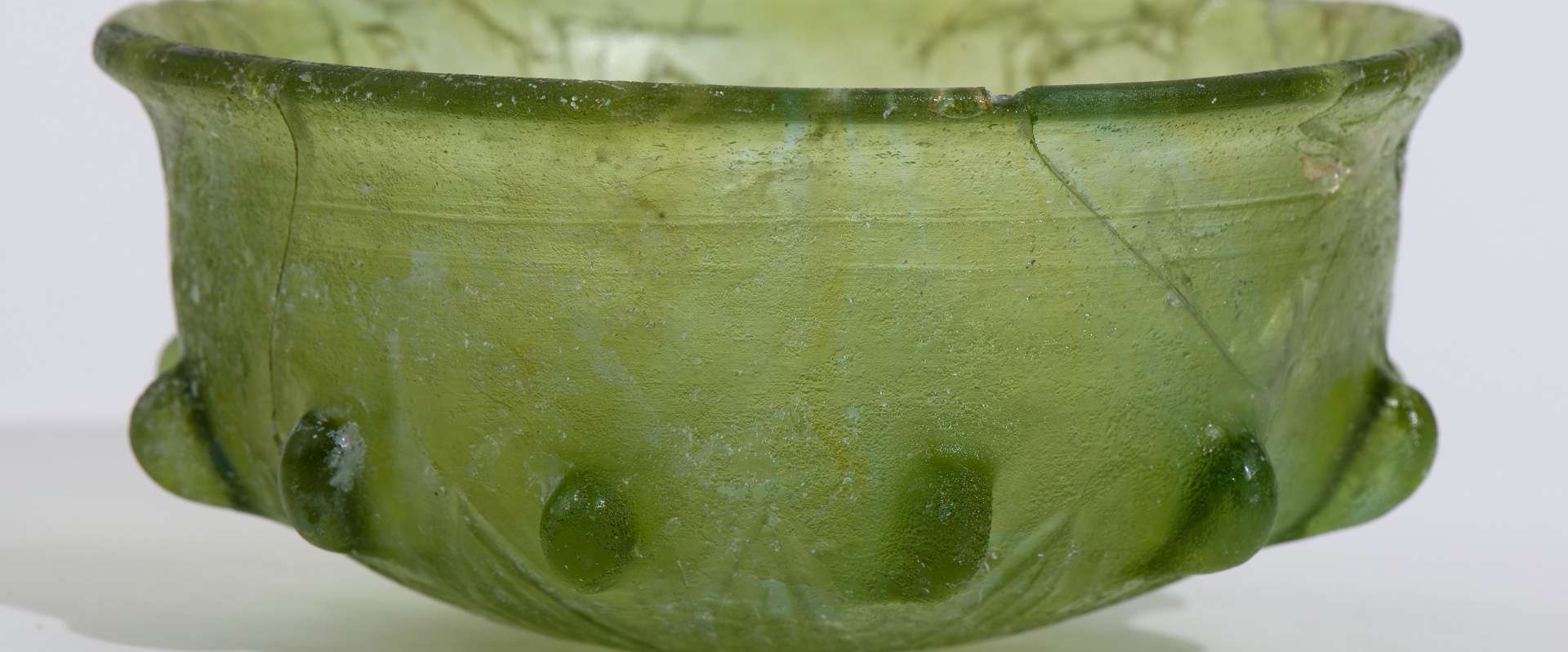
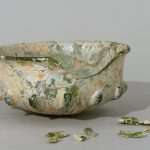
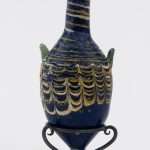
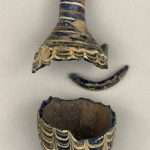
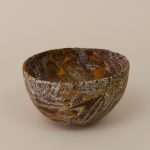
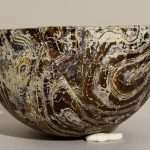
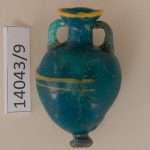
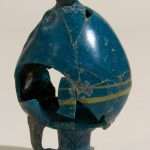
The intervention was carried out in two separate phases. The first, in May 2017, involved the treatment of 24 objects destined for the exhibition Pretiosa vitrea. Ancient Glassmaking in the Museums and Private Collections of Tuscany, held at the Museo Archeologico Nazionale di Firenze from 17 October 2017 to 29 January 2018. A second group of ancient glass vessels, whose treatment was completed in November 2022, was entrusted to the Opificio delle Pietre Dure laboratories in October 2019, also with teaching and research purposes in mind — specifically for the Institute’s Scuola di Alta Formazione, given that many of these objects, coming from a historical collection, had undergone conservation treatment in the past, between the second half of the 19th century and the early decades of the 20th. The preliminary investigations served not only to inform the conservation approach but also to study the materials used in earlier interventions, since the conservation problems presented by the vessels on arrival in the laboratory were largely attributable to the deterioration of products used in previous restorations, their particular composition and their natural ageing.
In the past, the materials available to conservators consisted predominantly of organic substances of animal or vegetable origin, as research into synthetic adhesives and their commercial development did not begin until the 1930s. Before that time, the materials used in glass conservation were not light-transmitting and therefore could not blend with the original parts — an effect that earlier restorers nonetheless sought to achieve. For this reason, it is not uncommon to find fragments of unrelated glass inserted to replace missing sections in original vessels.
Today, a range of products is available on the market that allows interventions on glass objects with considerably less impact than in the past. The adhesives used provide an excellent bond at very small thicknesses. The same resins are employed both for assembling fragments and for reconstructing missing sections. Their refractive index, very close to that of glass, makes it possible to achieve fills that harmonise with the original material while remaining visually distinguishable from the ancient parts. These resins can also be tinted to obtain the desired chromatic gradations.