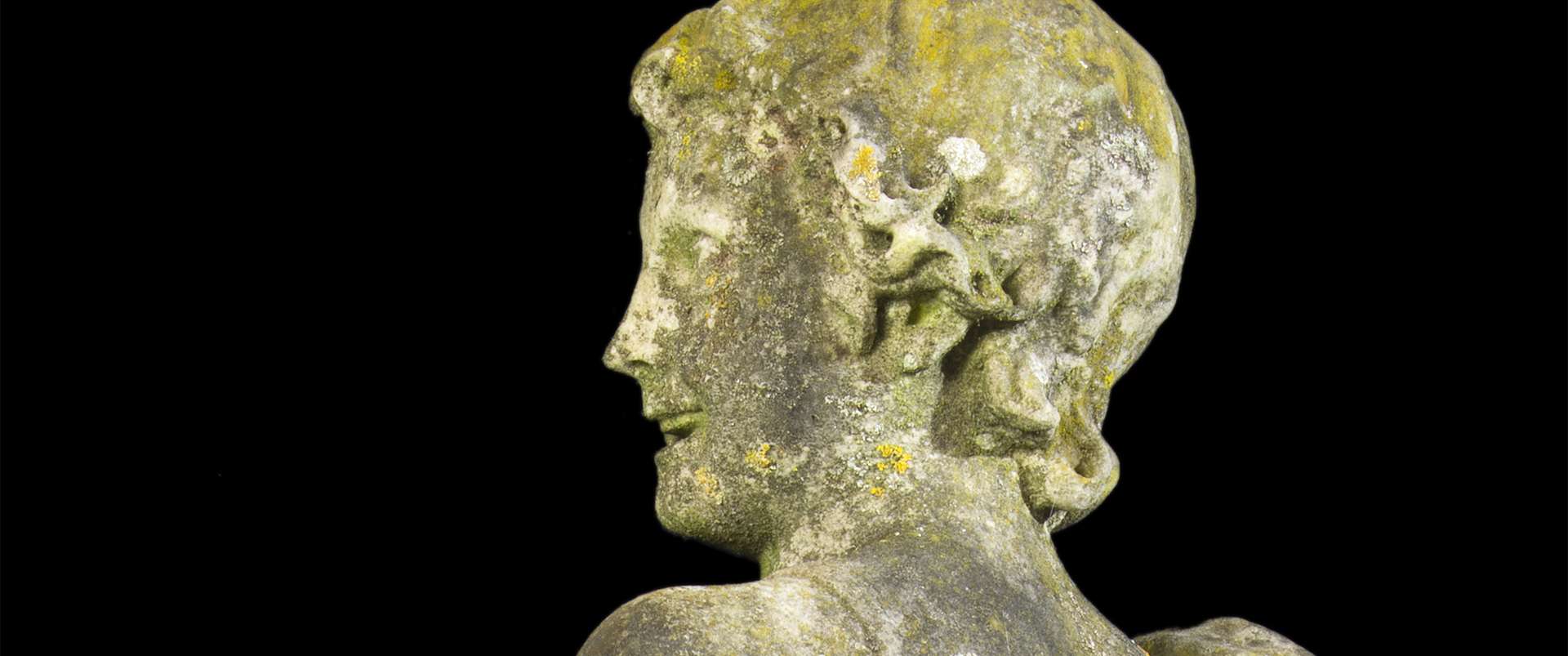
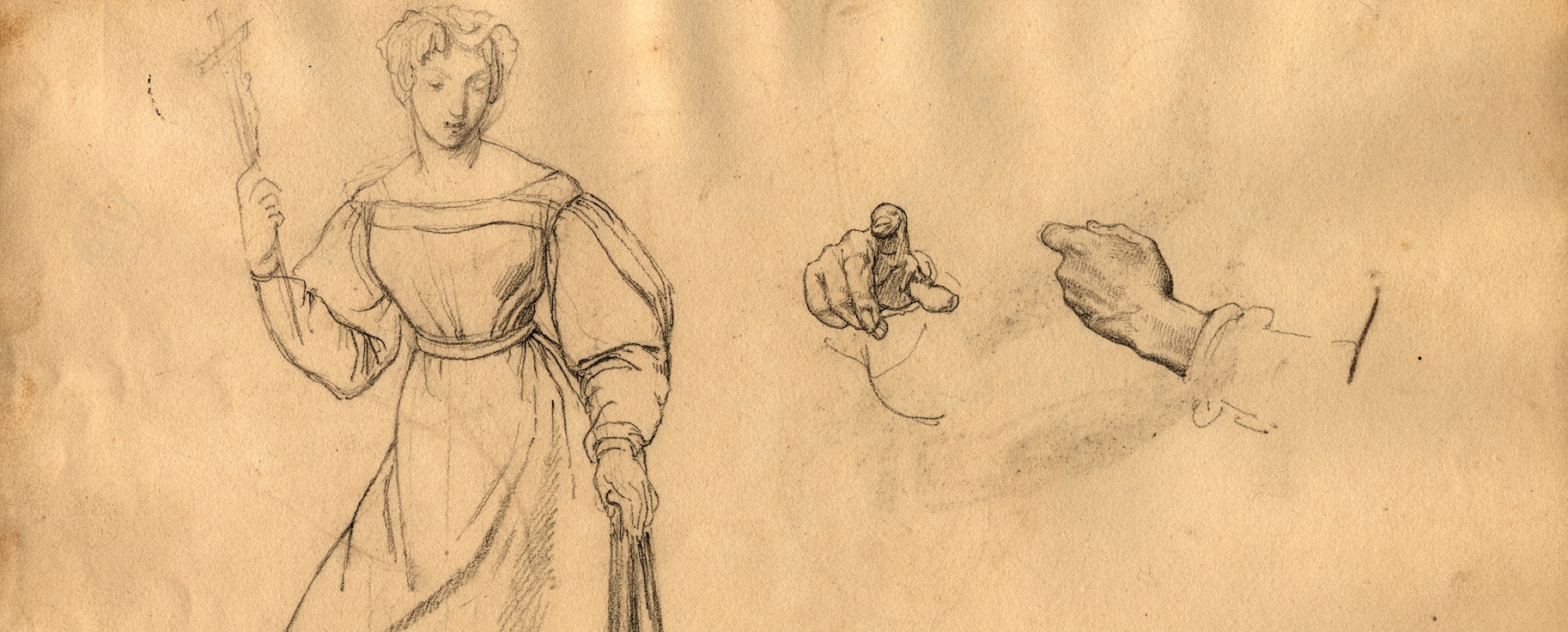
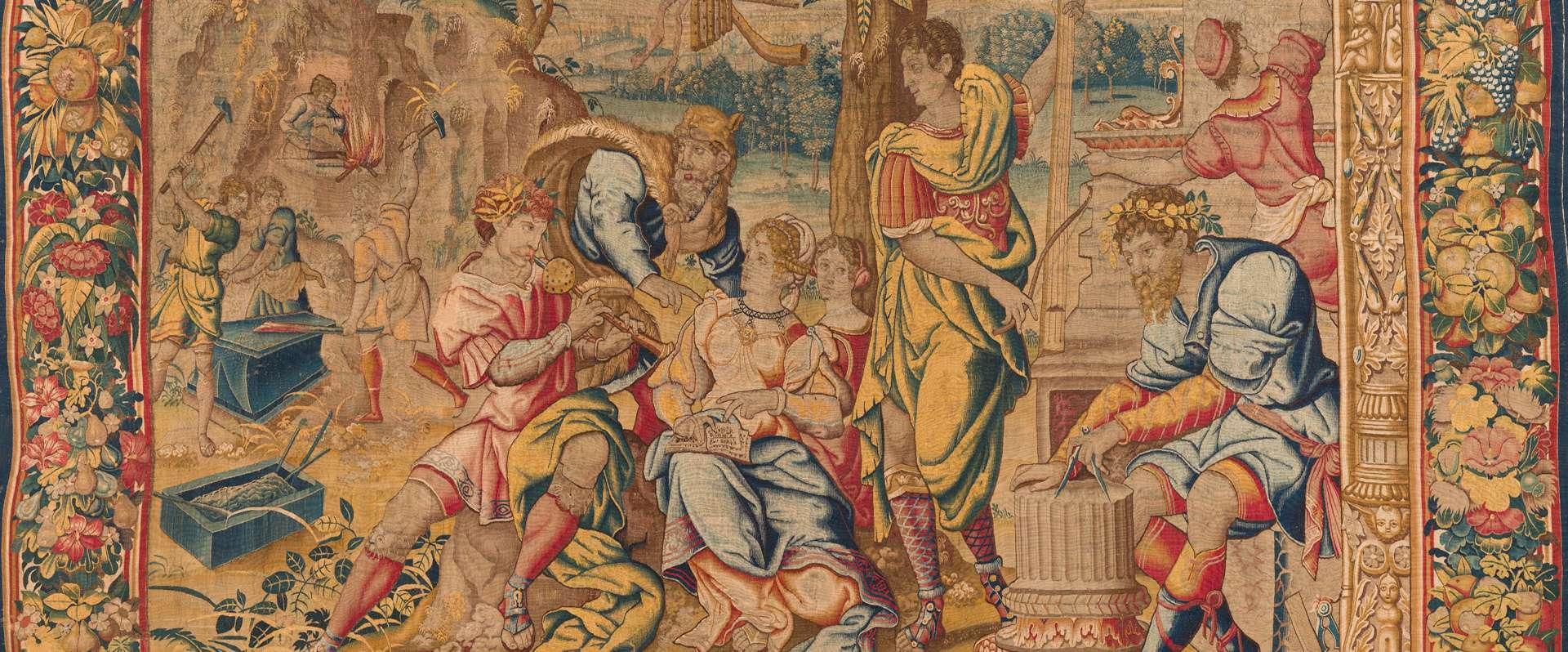
The sculpture Smiling Cupid was made to decorate the Vasca dell’Isola in the Boboli Gardens, the gardens of Palazzo Pitti, residence of the Medici family from 1549. The Vasca dell’Isola was designed by Giulio and Alfonso Parigi in 1618. The work depicts a standing Cupid — a young nude figure in a classically inspired contrapposto pose. He wears only a drape covering his back and right shoulder. The sculpture has over time been the subject of numerous shifts in attribution, arising from differing stylistic and documentary interpretations, with uncertainty between the sculptor Giovan Francesco Susini and Cosimo Salvestrini, his pupil in the first half of the 17th century.
The statue, carved in the round, is in white marble. Close examination reveals only traces of drill work used in modelling the hair, ears, nostrils and left hand.
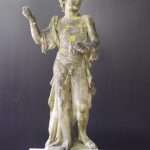
The work presents a pattern of deterioration typical of objects exposed outdoors: biofilm and autotrophic and heterotrophic micro-organisms with consequent biodeterioration of the stone. In addition to a layer of loose surface deposits, a blackish patina covered a large part of the surface in the most exposed areas. Bright green algal crusts were also present, particularly on the lower section of the sculpture, on the left leg and on the inner surface of the drape at the back. Several types of lichen were identified, both circular and foliose in form, as well as mosses and pinkish deposits — likely also biological in nature — most visible on the right wrist and on the Cupid’s head. Wash marks were present on the lower section, particularly on the right leg, along with bird droppings, numerous cobwebs, insect remains and chrysalises.
The base of the work is positioned on a raised support set below the original plinth and has been reworked and filled with pieces of chromatically compatible marble. The insertion of a pin to secure the right hand and the existing fills are attributable to earlier interventions.
Photographic documentation in visible light and UV fluorescence. Biological investigations (OPD Biology Laboratory).
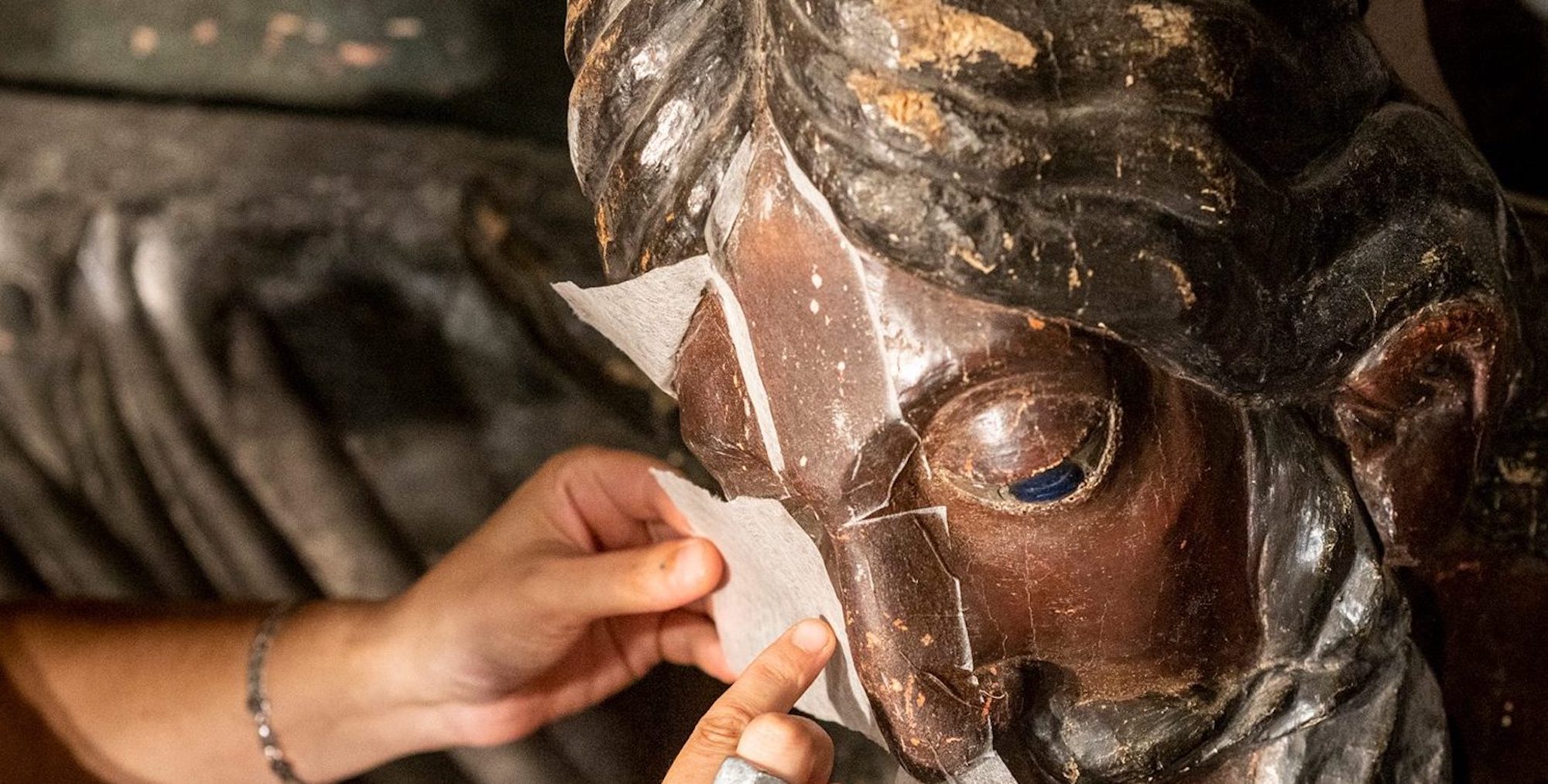
The preliminary operation was the removal of the sculpture from its plinth and its transport to the laboratory. Cleaning tests were carried out on three key areas using four different products (biocides) and four different support materials. Once the most suitable biocide had been identified, the biomass was treated and the surfaces cleaned using chemical and mechanical methods, achieving a uniform result confirmed by examination under UV light.
In parallel with the removal of atmospheric particulate and biomass, earlier fills that were no longer fit for purpose were also removed.
Next section